
Ptfe Machining OEM Manufacturing Solutions from China
The Definitive Guide to Professional Ptfe Machining
Precision machining of PTFE (Polytetrafluoroethylene), commonly known by the brand name Teflon®, is a specialized manufacturing discipline demanding deep material expertise and advanced technical capabilities. For over two decades, Kaxite has stood at the forefront of this niche, providing engineered polymer solutions to industries where performance under extreme conditions is non-negotiable. Unlike metals or more rigid plastics, PTFE possesses unique characteristics—its superb chemical resistance, exceptional dielectric properties, inherent lubricity, and wide service temperature range—that require a distinct machining approach to preserve its inherent advantages and achieve the required dimensional tolerances.
At Kaxite, our mastery lies not just in cutting the material, but in understanding its behavior. We employ state-of-the-art CNC (Computer Numerical Control) equipment, calibrated specifically for polymers, and pair it with proprietary tooling geometries and machining parameters developed through extensive R&D. This ensures that components are not merely shaped, but are optimized for their end-use environment, whether in a semiconductor cleanroom, a pharmaceutical processing line, or within a critical aerospace assembly.
Critical Material Properties & Machining Considerations
Successfully machining PTFE begins with a thorough understanding of its properties. Its softness and high thermal expansion coefficient present the primary challenges, as they can lead to deformation, poor surface finish, and inaccurate dimensions if not properly managed.
- Low Coefficient of Friction: Requires secure, non-marring fixturing to prevent part movement during machining.
- High Thermal Expansion: Machining must account for material growth due to heat from cutting tools; controlled environments and sharp tools are essential.
- Soft and Ductile Nature: Demands extremely sharp, polished cutting tools with positive rake angles to achieve a clean shear rather than a tearing action.
- Creep (Cold Flow): The material can deform under sustained load. Designs and clamping strategies must minimize points of high stress concentration.
- Excellent Chemical Inertness: While a key benefit for the part, it means standard coolants may not be suitable. Often, compressed air or specialized coolants are used for heat dissipation.
Kaxite's Precision PTFE Machining Capabilities
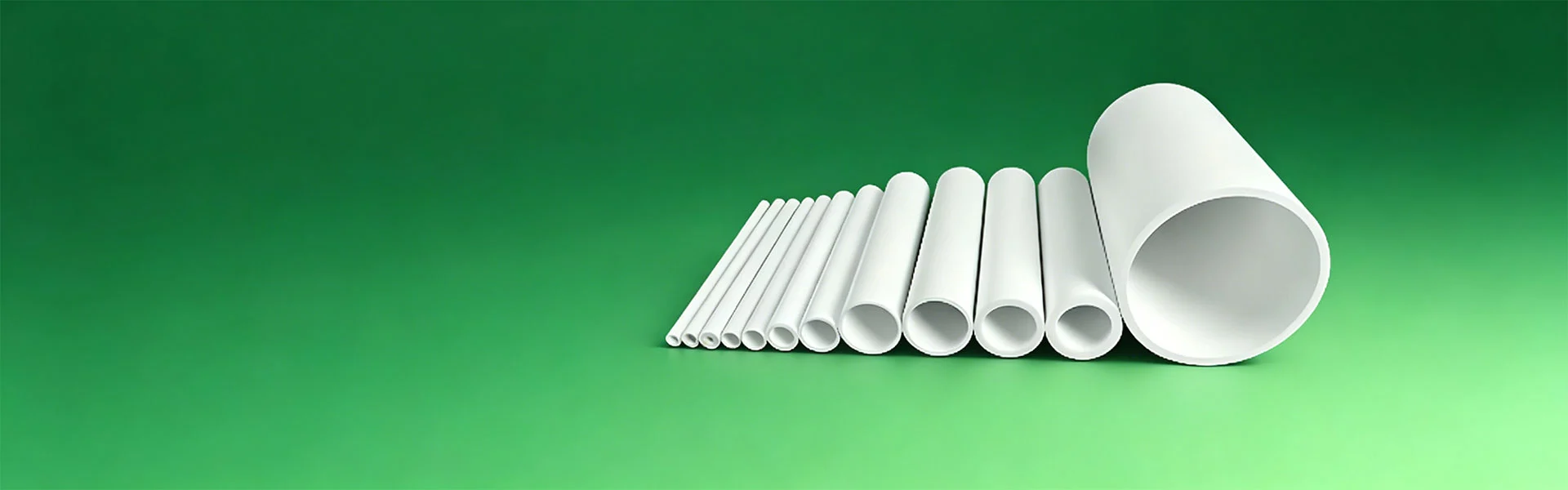
Our facility is dedicated to transforming PTFE stock shapes—rods, sheets, tubes, and films—into high-precision, ready-to-install components. We support both prototype and high-volume production runs with consistent, repeatable quality.
Primary Machining Processes:
- CNC Milling: For creating complex 3D contours, pockets, slots, and faces. Ideal for valve bodies, manifolds, and custom seals.
- CNC Turning: For producing rotational parts like bushings, sleeves, pistons, and insulators with tight diameter tolerances.
- Drilling & Tapping: Precision hole creation and thread forming for assembly and fastening.
- Skiving: A specialized process for producing thin, continuous tapes or films from a block or cylinder, crucial for thread seal tape and diaphragm stock.
- Cutting & Slicing: Accurate cross-sectioning of rods and tubes, and slicing of sheets into specified thicknesses.
Standard Tolerances for PTFE Parts (Kaxite Standard):
| Dimension Range | Standard Tolerance (±) | Precision Tolerance (±)* |
|---|---|---|
| 0.010" - 0.500" | 0.005" | 0.002" |
| 0.501" - 1.000" | 0.010" | 0.005" |
| 1.001" - 3.000" | 0.015" | 0.008" |
| 3.001" - 6.000" | 0.020" | 0.010" |
| > 6.000" | 0.030" | 0.015" |
*Precision tolerances require consultation and are subject to part geometry and material grade.
PTFE Grades and Forms We Machine at Kaxite
PTFE is available in various grades, each modified to enhance certain properties. Selecting the correct grade is a critical first step in the design process.
| PTFE Grade | Key Characteristics | Typical Kaxite Applications |
|---|---|---|
| Virgin PTFE | Pure, unmodified. Highest chemical resistance, best electrical properties, white color. | Semiconductor components, critical chemical seals, high-frequency insulators. |
| Glass-Filled PTFE | Reinforced with glass fibers. Improved wear resistance, reduced creep, higher stiffness. | Bearings, bushings, wear pads, thrust washers in mechanical assemblies. |
| Carbon-Filled PTFE | Reinforced with carbon/graphite. Excellent wear and friction properties, better thermal conductivity. | Piston rings, compressor rings, dynamic seals in dry or lubricated environments. |
| Stainless Steel Filled PTFE | Reinforced with stainless steel powder. Greatly improved compressive strength and load-bearing capability. | Heavy-duty bushings, backup rings for high-pressure seals, valve seats. |
| PTFE Compounds (e.g., PFA, FEP) | Modified for improved melt-processability while retaining key PTFE properties. | Complex molded or extruded shapes that may also require secondary machining. |
PTFE Machining FAQ: Expert Insights from Kaxite
Q: What are the biggest challenges in PTFE machining, and how does Kaxite overcome them?
A: The two foremost challenges are the material's softness, which leads to tearing rather than cutting if tools are dull, and its high coefficient of thermal expansion, which can cause finished parts to shrink or expand outside tolerance after machining. Kaxite overcomes these by using exclusively razor-sharp, high-polish carbide or diamond-tipped tools with geometries optimized for PTFE. We maintain a temperature-controlled machining environment and employ high-speed, low-feed-rate strategies with compressed air cooling to minimize heat generation and part distortion, ensuring dimensional stability from machine to application.
Q: Can you hold metal-like tolerances on PTFE parts?
A: While PTFE cannot typically achieve the ultra-tight tolerances of hardened steel due to its material behavior, Kaxite specializes in holding remarkably precise tolerances for a polymer. As shown in our tolerance table, we routinely machine to within ±0.002" on small features. Achieving this requires expert knowledge of tool paths, sequencing, and in-process measurement to compensate for material characteristics. We work closely with clients to determine the optimal, functional tolerance that ensures part performance without unnecessary cost.
Q: What post-machining processes or finishes are available for PTFE components?
A: PTFE is often used as-machined due to its naturally low-friction surface. However, Kaxite offers several post-processing options. Deburring is carefully performed to remove any fine filaments. For sealing surfaces or specific wear applications, we can provide a controlled surface finish (Ra value) through specialized tooling passes. For certain filled grades, light grinding or lapping can be used to achieve ultra-flat surfaces. It is important to note that PTFE cannot be painted or plated in a traditional sense due to its non-stick properties.
Q: How does the choice between virgin and filled PTFE grades affect the machining process?
A: The filler material significantly alters machining demands. Virgin PTFE is gummy and requires the sharpest tools. Glass or carbon-filled grades are more abrasive and will wear standard tools faster; Kaxite uses premium, wear-resistant tooling for these materials. Stainless-steel-filled PTFE is the most abrasive and requires diamond-coated tools for economic production. Each grade also produces different chip formations. Our machinists are trained to recognize optimal chip shape and color as an indicator of correct machining parameters for each specific grade.
Q: What information should I provide to Kaxite for an accurate PTFE machining quote?
A: To provide a precise and timely quote, please supply the following: 1) A detailed drawing (PDF or STEP file) with all critical dimensions and tolerances clearly called out. 2) The specific PTFE material grade (e.g., Virgin, 25% Glass Filled). 3) The required quantity (prototype, low-volume, production run). 4) The application or operating environment (e.g., chemical exposure, temperature, pressure, dynamic vs. static load). This context allows Kaxite engineers to recommend potential design for manufacturability (DFM) improvements and select the optimal machining strategy for your part's success.
Q: Why is Kaxite a preferred partner for complex or high-precision PTFE components?
A: Kaxite distinguishes itself through dedicated specialization and vertical integration. We are not a general machine shop that occasionally works with plastics. Our entire process—from material sourcing and storage, to CNC programming, machining, quality control, and packaging—is tailored for engineered polymers like PTFE. Our engineers have decades of combined experience solving unique challenges, from machining thin-walled PTFE membranes to producing large-diameter seals for the aerospace industry. We view each project as a partnership, leveraging our expertise to ensure the delivered component performs flawlessly in your system.


- View as

Custom-Designed Not Be Corrodible Ptfe Machining Custom Ptfe Pipe Connector
Kaxite Sealing's custom-designed, corrosion-resistant PTFE machining custom PTFE pipe connectors provide superior sealing solutions for chemical, pharmaceutical, and industrial applications. Engineered with non-corrosive PTFE for durability in harsh environments, these connectors offer reliable performance and easy installation. Ideal for engineers and manufacturers seeking precision and longevity, they solve leakage issues and enhance system efficiency. Stand out with bespoke designs tailored to specific needs, ensuring a perfect fit every time. Experience peace of mind with our quality promise and efficient service.

Non-stick Self-lubricating Ptfe Machining Parts Ptfe Glide With Low Friction Coefficient
Discover Kaxite Sealing's premium non-stick, self-lubricating PTFE machining parts and PTFE glide with an ultra-low friction coefficient, designed for seamless industrial performance. Crafted from high-quality PTFE, these parts offer superior durability, reduce wear, and ensure effortless movement in demanding applications like machinery, automotive, and aerospace. Ideal for engineers and manufacturers seeking reliable, maintenance-free solutions, they enhance efficiency and solve friction-related issues with precision. Experience smoother operations and extended equipment life, setting Kaxite Sealing apart with unmatched quality and innovation.

Low Friction Coefficient High Resistant Ptfe Machining Spare Part Of Pump
Kaxite Sealing's Low Friction Coefficient High Resistant PTFE Machining Spare Part of Pump ensures superior durability and smooth operation for industrial pumps. Engineered with advanced PTFE material, it reduces wear, minimizes maintenance, and enhances efficiency. Ideal for engineers and manufacturers, this spare part boosts performance and reliability. Choose Kaxite Sealing for top-quality solutions that keep your systems running seamlessly.

White Ptfe Machining Dielectric Insulation And Non-stick Properties
Kaxite Sealing's White PTFE Machining offers superior dielectric insulation and non-stick properties, ideal for electronics and industrial applications. Its high-grade PTFE ensures durability and reliability, solving adhesion and electrical issues efficiently. Experience enhanced performance and peace of mind with this standout solution.

Seal Ptfe Machining Chemical Resistance Apply For Industrial And Mechanical
Discover Kaxite Sealing's Seal PTFE Machining solutions, engineered for superior chemical resistance in industrial and mechanical applications. This high-performance product excels in harsh environments, offering durability and reliability that sets it apart from competitors. Ideal for engineers and manufacturers, it ensures seamless operations and peace of mind by solving chemical exposure challenges. Experience unmatched quality and innovation—choose Kaxite Sealing for robust, trusted performance.

Molded Ptfe Machining Filled Graphite Bronze MoS2 Heat Resistance
Discover Kaxite Sealing's Molded PTFE Machining Filled with Graphite, Bronze, and MoS2—engineered for superior heat resistance. Ideal for high-performance sealing applications where durability and reliability are paramount, it reduces wear, handles extreme temperatures, and enhances operational efficiency. Trust Kaxite Sealing for advanced sealing solutions.

Corrosion Resistance Ptfe Machining RoHS And ISO9001 Certification
Kaxite Sealing's corrosion-resistant PTFE machining products offer superior durability and performance for demanding industrial applications. With RoHS and ISO9001 certification, they ensure safety and quality, ideal for engineers and manufacturers seeking reliable sealing solutions that withstand harsh environments. Experience peace of mind with unmatched resistance and precision craftsmanship.

High Precision PTFE Machining Molded Parts Glass Fiber Or Carbon Fiber Filled
Kaxite Sealing's High Precision PTFE Machining Molded Parts with Glass Fiber or Carbon Fiber Filling deliver exceptional durability and precision for demanding industrial applications, offering superior chemical resistance, low friction, and enhanced mechanical strength. Ideal for automotive, aerospace, and chemical processing sectors, these parts ensure reliable performance, reduce downtime, and solve wear and leakage challenges. Their unique filled PTFE composition outperforms standard alternatives, providing long-lasting solutions that inspire confidence in your operations. Trust Kaxite Sealing for quality that drives efficiency.

Injection Ptfe Machining High Temperature Resistance Function
Discover Kaxite Sealing's Injection PTFE Machining with High Temperature Resistance Function—a premium solution for demanding industrial applications. Engineered with precision PTFE material, it ensures exceptional durability and reliability in extreme heat environments, ideal for engineers and manufacturers in aerospace, automotive, and chemical sectors. This product solves heat-related sealing challenges, boosting efficiency and peace of mind. Stand out with its superior thermal stability and custom-fit design. Elevate your projects—experience unbeatable performance today!

Precision Cnc Ptfe Machining Chemical Resistance And Temperature Resistance
Kaxite Sealing’s Precision CNC PTFE Machining delivers superior chemical and temperature resistance, ideal for demanding industrial applications. These expertly crafted components ensure reliability, durability, and peak performance, solving critical sealing challenges. Trust Kaxite Sealing for unmatched quality that drives efficiency and peace of mind.

Teflon PTFE Plastic Turning Machining Part White Non-stick Ptfe
Discover Kaxite Sealing's Teflon PTFE Plastic Turning Machining Part in white, a durable, non-stick solution ideal for industrial and kitchen applications. Its smooth surface resists wear, ensuring efficiency and reliability for professionals and DIY enthusiasts alike. Experience hassle-free use and superior performance with this essential component.

Molded Insulation PTFE Machining Heat Resistance Filled Glass Fiber
Discover Kaxite Sealing's Molded Insulation PTFE Machining with Heat Resistance Filled Glass Fiber – a superior sealing solution engineered for extreme environments. This product excels in durability and thermal stability, making it ideal for industries like automotive, aerospace, and chemical processing. Its unique filled glass fiber composition enhances strength and heat resistance, outperforming standard PTFE options. Experience reliability and efficiency in demanding applications, ensuring safety and longevity. Choose Kaxite Sealing for cutting-edge performance that meets rigorous standards, delivering unmatched quality and peace of mind.


